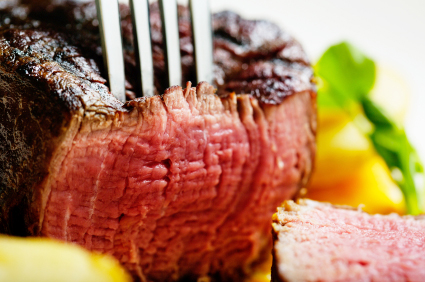
Nothing beats a perfectly cooked steak. But how to cook steak so that it’s exactly as you want it can be somewhat of a challenge.
Part of how to cook steak is choosing the right cut of meat. You want to choose a tender cut of meat, such as rump or sirloin, but the difficulty is that tender meat is very easy to overcook. For example, the difference in internal temperature between a medium-rare steak and a medium-well one is 10°C/20°F, and this can be reached very quickly when frying or grilling at high cooking temperatures.
So cook steak at a lower temperature, you say. Well, no, you actually do want to cook steak at a high temperature because that produces what is called a Maillard reaction—the browning of the outside that gives the steak its intense meaty flavour. Unfortunately this same process causes the steak to lose moisture.
Contrary to the belief that searing meat locks in the juices, the reality is it doesn’t. It simply flavours the meat. In fact, if seared for too long, steak will completely dry out. That sizzling sound when you’re cooking steak is the meat juices bubbling away.
So, how to cook steak that is beautifully browned on the outside yet still tender and juicy? It may sound all too hard but there are ways to make it easier. Here are a few tips:
- start with a room-temperature steak
- pre-heat your pan and make sure it’s hot enough before putting the steak in
- don’t overcrowd the pan or the steak will stew rather than fry
- take the steak out of the pan before it’s done—it will continue to cook while resting
- always rest the steak—this allows the meat to relax and keeps the remaining juices in it.
Two ways for how to cook steak
Constant flipping
When Heston Blumenthal (inspired by Harold McGee’s On Food and Cooking) demonstrates how to cook steak he recommends pre-heating your pan on high for at least 5 minutes, adding the steak and then flipping it every 15 seconds until it is 5 degrees below the temperature you want (see temperatures below). By resting the meat for at least half the time it was cooked in the pan, will allow it to continue cooking and reach the desired temperature.
The idea behind the constant flipping is that each side of the meat gets pulses of high heat rather than constant high heat. The regular turning allows the outside to cool in between bursts of heat so the steak doesn’t overcook on the surface yet be underdone in the middle.
Two-step fry and bake
When I cook steak I use Harold McGee’s other method—the two-step process of cooking steak, starting it at a high heat for browning, then finishing at a lower heat to ensure it doesn’t dry out. It’s a personal thing, I just feel more comfortable with it, probably because it gives me a chance to work on other parts of the meal while the steak is cooking. Here is how to cook steak my way.
Start by placing an oven-proof frypan on medium-high to heat up. Pre-heat your oven to 180°C/350°F.
Once the pan is hot add a glug (1 tbs) of olive oil, swirl to coat the pan, then add your room-temperature steak. Sear for about 45 seconds on each side, to colour the steak. Remove the frypan from the hotplate and place it in the pre-heated moderate oven to cook until it has almost reached the desired temperature (see temperatures below). Once done, I allow the meat to rest for approximately half of the cooking time.
Knowing when steak is done
Temperature is the easiest measure of knowing when steak is cooked to your liking.
Using a meat thermometer, insert the probe into the middle of the thickest part of the steak to check the internal temperature.
- Bleu 45°C/110°F
- Rare 50°C/120°F
- Medium-rare 55°C/130°F
- Medium 60°C/140°F
- Medium-well 65°C/150°F
- Well done 70°C/160°F
The steak will continue to cook a little while it’s resting so you want to remove it from the pan when it’s at least a few degrees lower than your desired temperature.
What to serve with steak
- Compound butter—flavoured butter that melts over the warm meat
- Salads
- Potatoes—creamy mash or baked with crispy skin
- Caramelised onions
- Sauces —mushroom, Béarnaise, brandy cream, red wine jus