Healthy eating and nutrition are much talked about subjects these days. There are many differing approaches and opinions, but what does it all mean in dietary terms?
There are a few general rules for healthy eating and nutrition:
- Eat regular meals
- Manage your portions
- Eat more fruit and vegetables
- Eat less processed food
- Limit alcohol consumption
- Limit “sometimes” foods such as biscuits, cake, soft drinks and takeaway foods
- Drink plenty of water.
Healthy eating is about consuming the right balance of meats, fruits, vegetables, dairy, grains and oils/good fats each day, in the right quantities for good nutrition. Nutrition is making sure that your body is receiving the vital nourishment it needs.
Variety underpins healthy eating and nutrition. It’s important to eat a wide range of foods from the each food groups every day. This will ensure you gain essential vitamins and minerals, giving you more energy and boosting your immune system.
What we eat is divided into five basic food groups:
- grains—bread, cereals, rice, pasta, noodles
- vegetables, legumes, fruit
- dairy—milk, yoghurt, cheese
- meat, fish, poultry, eggs, nuts, seeds
- Oils, fats, extras (sometimes foods).
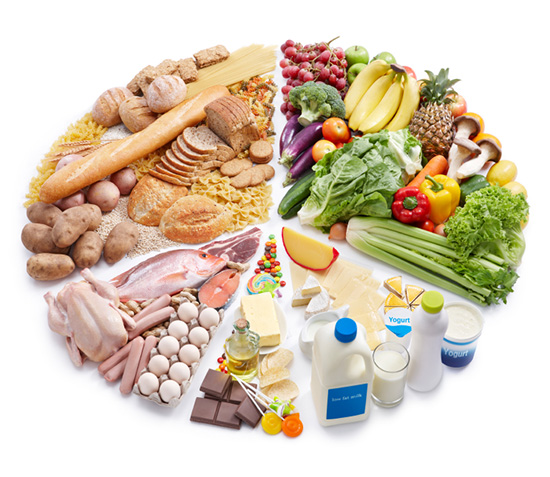
The healthy eating chart above indicates the basic proportions of the different types of food that we should be eating each day for good nutrition.
A general guide for healthy eating and nutrition is to:
- eat plenty of vegetables, legumes and fruits
- eat plenty of wholegrain cereals, such as breads, rice, pasta and noodles
- have a moderate amount of lean meat, fish, poultry and/or eggs and nuts
- have a moderate amount of milk, yoghurts and cheeses and/or alternatives
- only have a small amount of oils, fats and “sometimes” foods
- drink plenty of water.
Serving sizes are also important for healthy eating and nutrition. Over time, the quantity of food (and in particular the amount of fat) we consume has increased. In addition, our energy intake is not always matched with the amount of physical activity we undertake each day, which can lead to health problems. So what is a serving size?
According to The Australian Guide to Healthy Eating*:
| Food group | 1 serve equals |
| Grains | 2 slices of bread or 1 medium bread roll 1 cup cooked rice, pasta or noodles 1⅓ breakfast cereal or ½ cup muesli |
| Vegetables, legumes | ½ cup cooked vegetables ½ cup cooked dried beans (e.g. cannellini, borlotti), chickpeas or lentils 1 cup salad 1 potato |
| Fruits | 1 medium piece (e.g. apple, banana, orange) 2 small pieces (e.g. apricots, kiwi fruit, plums) ½ cup juice dried fruit (e.g. 1½ tbs sultanas) |
| Dairy | 1 cup milk (or ½ cup evaporated milk) 40 g (2 slices) cheese 200g yoghurt |
| Meats, poultry, fish, eggs, nuts, seeds | 65–100 g cooked meat or poultry 80–120 g cooked fish 2 small eggs ⅓ cup peanuts or almonds ¼ cup sunflower seeds or sesame seeds |
| Oils, fats, extras | 2 tbs (40g) cream, mayonnaise 1 tbs (20g) butter, margarine, oil 1 (40g) doughnut 4 (35g) plain sweet biscuits 1 slice (40g) plain cake 25g chocolate 200ml wine 60ml spirits 600ml light beer 400ml regular beer 1 can (375ml) soft drink ⅓ (60 g) meat pie or pastie 12 (60 g) hot chips 1½ scoops (50g scoop) ice cream |
The suggested number of serves from each of the food groups is listed in the table below.
| Grains | Vegetables, legumes | Fruits | Dairy | Meat, fish, poultry, eggs, nuts | Oils, fats, extras | |
| Women 19–60 |
4–9 | 5 | 2 | 2 | 1 | 0–2½ |
| Men 19–60 |
6–12 | 5 | 2 | 2 | 1 | 0–3 |
*Note: there are many different types of diets for healthy eating. Some people may choose to reduce the amount of grains they eat and substitute with more fruit, vegetables and proteins.
Sources:
Department of Health and Ageing 1998 The Australian Guide to Healthy Eating, Department of Health and Ageing, Canberra, viewed 9 October 2012, <www.health.gov.au>
National Health and Medical Research Council 2003, Dietary Guidelines for Australian Adults, National Health and Medical Research Council, Canberra, viewed 9 October 2012, <www.nhmrc.gov.au>